Written by

Reading time:
8
Minutes
+9,000 Ads Later: What Actually Makes Static Ads Convert on Meta
Most DTC brands running serious Meta spend have enough creative volume. They're not short on ads. They're short on ads that work.
We produce over 9,000 static ads a month at Statiq. We see this across every account, every vertical, every spend level. The ads that convert don't win because of better design or more testing. They win because they're built structurally differently from the ground up.
There are three elements. None of them are what most teams are briefing for.
Element #1: Bypassing the Format Filter
Your brain learned what ads look like. Close-up face talking to camera. Product shot with a benefit overlay. Bold headline on a colored background. The moment something matches that pattern, it gets categorized and skipped. Not a conscious decision, a conditioned one.
This happens before the copy. Before the offer. Before the viewer has processed a single word.
Most static ads fail here. Not because they're bad ads. Because they look exactly like ads.
In March, two statics Statiq produced for a client spent nearly $70,000 combined on Meta. One looked like a LinkedIn post. One looked like an email notification. Neither registered as an ad until the viewer was already reading it.
That result didn't come from a design decision. It came from a strategic one, made before anyone opened a design file. The question wasn't "what should this ad look like?" It was "what format would this audience not be expecting?"
Get that question wrong and Meta's algorithm can't save you. Get it right and the viewer is inside your message before their filter kicks in.
Element #2: Entering at the Right Awareness Stage
Most briefs start with the product. They list features, benefits, differentiators. Then someone writes a headline around those, and the ad goes to production.
The problem: that brief is written for a customer who already knows they have a problem and already knows what's causing it. That customer is comparison shopping. They've seen every claim in your category. They're expensive to acquire and there aren't that many of them.
The bigger market is the customer who has the problem but hasn't named it yet.
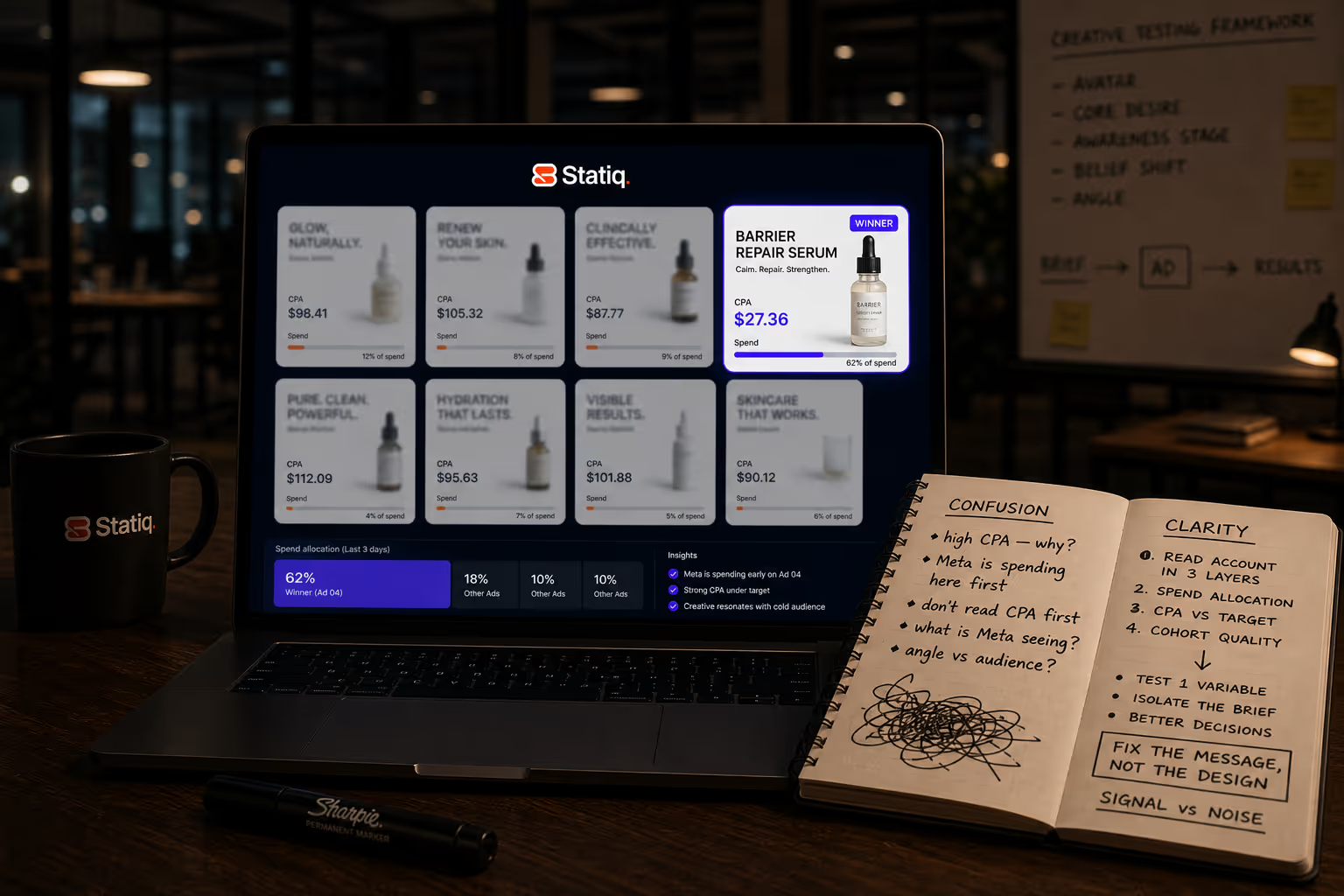
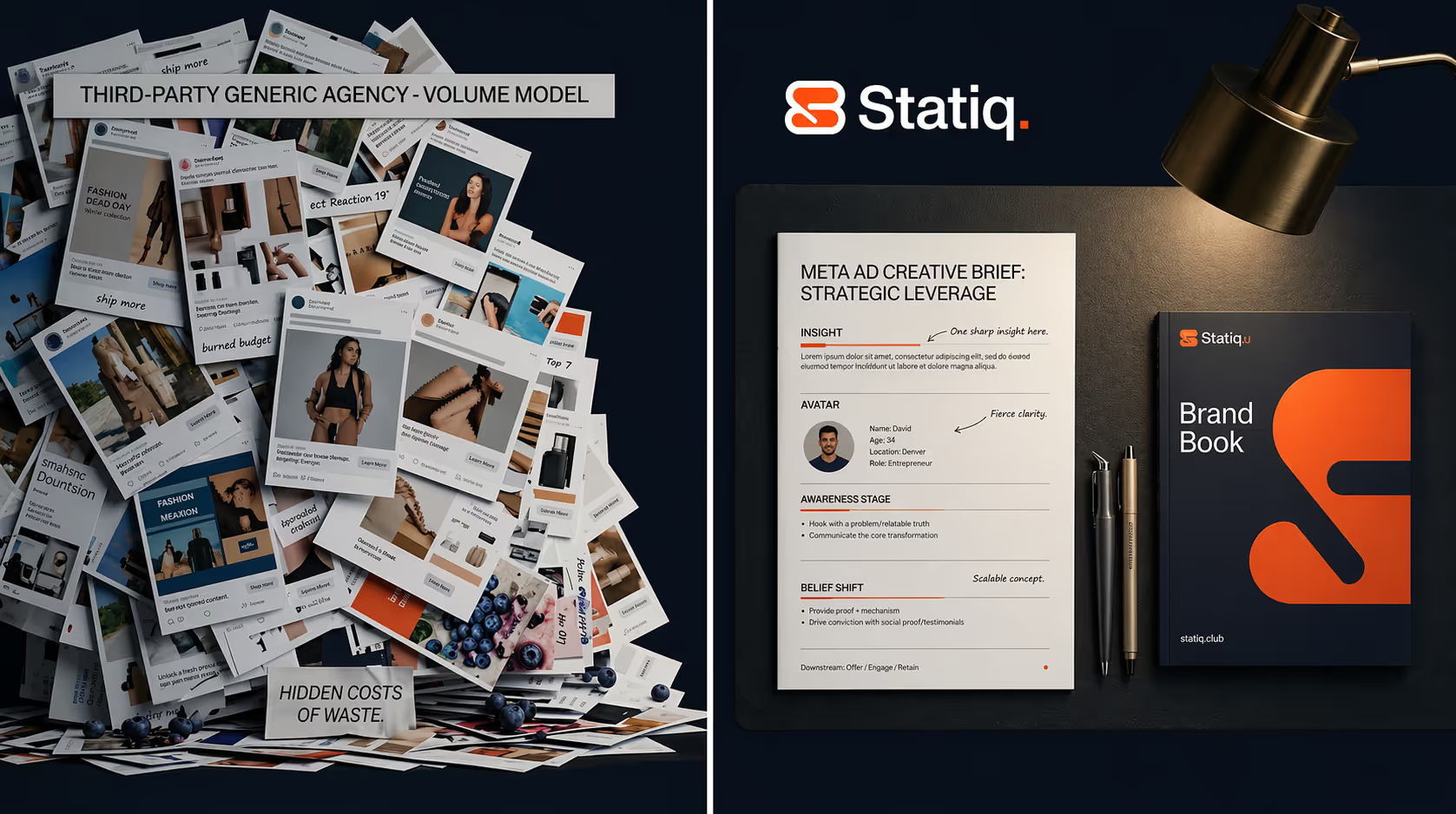
At Statiq, we map five things before building any creative: who the avatar is, what their core desire is, what their awareness stage is, what belief they need to shift, and only then, what the angle is. Most briefs go straight to point five. That's the mistake.
A coffee alternative brand we work with had a clear unaware customer: someone who felt jittery and couldn't sleep, but had no idea their coffee intake was causing it. The brief could have led with "mushroom coffee." Instead, the ad opened with: "Scientists discovered why most people can't sleep at night." The product didn't appear until halfway through. The landing page closed the sale.
That customer wasn't being sold to. They were being found.
The aware customer is the small, expensive market. The unaware customer is the large one. Which one your brief is written for determines which one your ad reaches.
Element #3: Controlling the Order in Which the Argument Lands
Good copy isn't just the right words. It's the right words in the right sequence.
Most static ads front-load everything: the product, the claim, the CTA. The viewer gets the conclusion before they have any reason to care about it. The ad loses them not because the message is wrong, but because the message arrived in the wrong order.
One of our clients, Manukora, sells premium honey at $99 a jar in a market where most honey costs $10. We've been producing their static ads for nine months. In that time, we've made highly conceptual ads, illustrated statics, text-heavy advertorials. Some won, some didn't. The ad that has outspent all of them looks like an Amazon listing. Simple. Offer-centric. Not the most creative thing we've made for them.
That ad works because of what the rest of the account did first.
The top-of-funnel statics built awareness. They found net new customers, established what made the product worth $99, and fed the funnel. By the time a cold audience reached the offer-centric ad, the argument had already been made. The listing just closed it.
Remove the cards above it and the $230K ad stops working. Not because it got worse, but because there's no one left who's ready to hear the conclusion.
An ad account is a house of cards. Every static has a position in the sequence. The brands that scale aren't running better individual ads. They're controlling the order in which the argument lands across the entire account, not just inside a single creative.
Why Your Internal Team Keeps Missing All Three
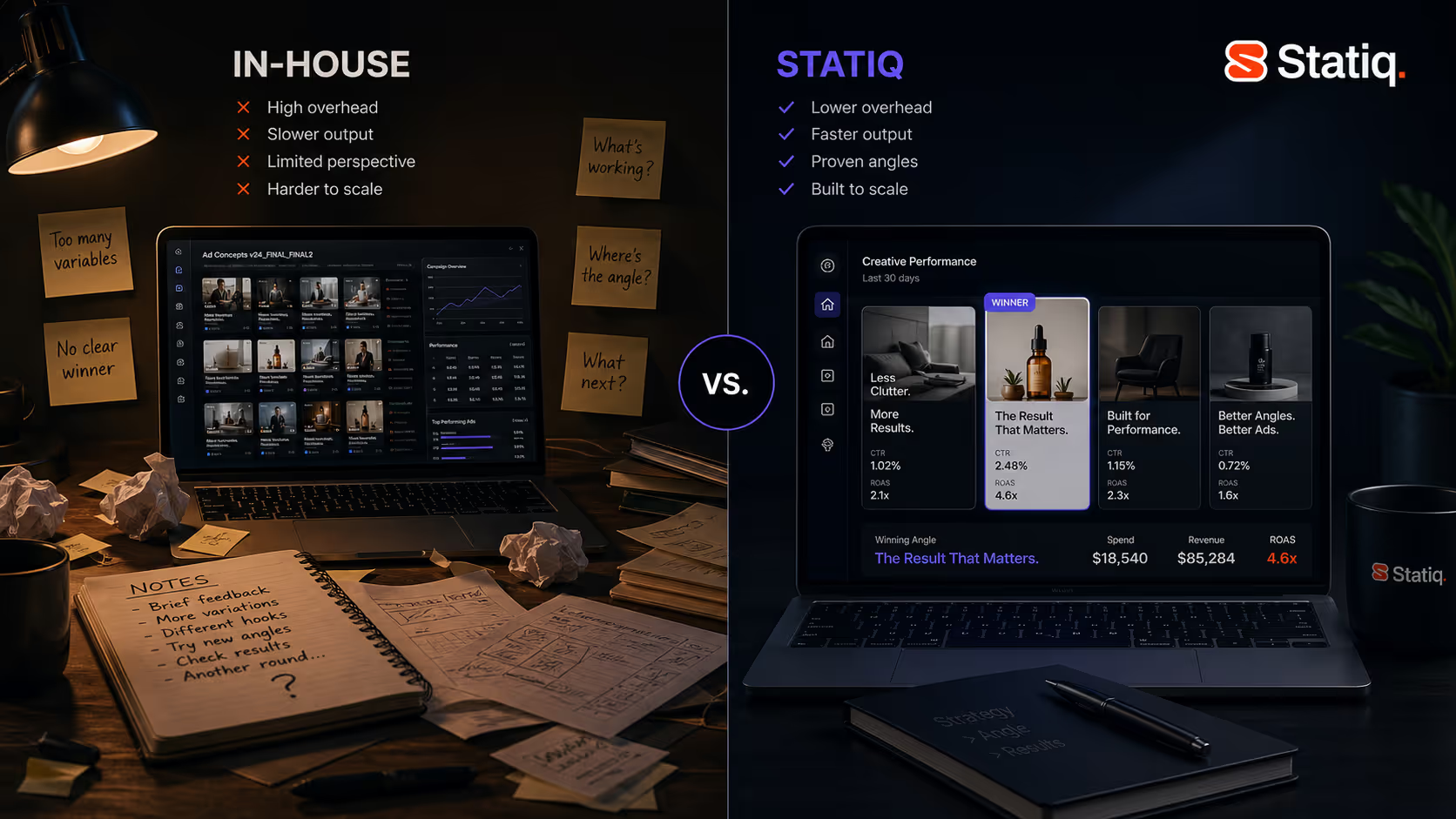
Your internal team knows your product better than anyone. They know the ingredients, the sourcing, the founder story, the customer reviews. That knowledge is valuable. It's also the thing that makes it nearly impossible for them to see your brand the way a cold audience does.
They brief from the inside out. They start with what they know about the product and work toward the customer. The three elements above require the opposite: starting with where the customer is and working toward the product.
ALOHA, one of Statiq's clients, put it directly: "Your recommended creatives found us quite a few winners with angles we would've never thought to try."
That's not a coincidence. It's structural. An outside team working across hundreds of DTC accounts sees patterns an internal team can't: not because they're smarter, but because they're not close enough to any single brand to lose perspective on it.
The angle that carries your account for the next six months exists. The question is whether the people building your briefs are positioned to find it.
How to Diagnose Your Own Creative Library
Three signals that your static ads are built on the wrong foundation.
- Every ad in your account looks like an ad in the first second.
Pull up your last ten statics. If all of them have a product shot, a headline, and a CTA in a format that's immediately recognizable as advertising, you're starting every impression behind the filter. You're paying for attention you're not getting. - Every brief starts with the product.
If your creative process begins with features, benefits, or differentiators, your ads are built for the aware customer. Check your briefs from the last 90 days. If none of them open with an avatar description and an awareness stage, you're targeting the smallest, most expensive segment of your market by default. - Your best performers are all offer-centric.
One strong offer ad is a sign of a healthy account. An account where the top spenders are all offer-centric is a sign that the top of the funnel isn't working. Those ads are converting the audience the rest of your account built. Without new awareness creative feeding the funnel, their performance will decline, and it will look like the offer stopped working when the real problem started months earlier.
If any of that sounds familiar, let’s talk. We'd be happy to take a look at what's happening in your account.