Written by

Reading time:
7
Minutes
How to Scale Meta Ad Creatives Without Burning Out Your Team
Scaling creative on Meta looks like a production problem, but it isn't.
The brands that burn out their teams aren't producing too little. They're producing the wrong way, shipping more ads on a model that was never built to scale, and watching the results stay flat while the workload compounds.
The solution isn't more headcount. It isn't a better project management tool. It's a different model entirely: one where the brief does the work that volume used to do.
Why Volume Alone Breaks Your Team
Two years ago, a strong account had a 20% hit rate on 100 ads shipped. Today that number has been cut in half.
Same 100 ads. 10 winners instead of 20. Statiq sees this across 50+ accounts spending millions per month on Meta.
The algorithm didn't get worse at finding winners. It got better at burying weak creative fast. An ad that doesn't earn attention in the first 48 hours gets buried. The floor got higher, which means the ads that used to pass, decent concept, average brief, fine execution, no longer do.
So what does a team do when hit rates drop? The instinct is to ship more. If 100 ads produce 10 winners, maybe 200 ads produce 20. The math seems right. The outcome isn't.
Doubling volume on a weak brief doesn't double winners. It doubles the work required to produce the same result, and doubles the budget burned getting there. The team doesn't scale. It breaks.
The Math Nobody Is Running
Here's what the volume model actually costs.
$200 per ad. 100 ads is $20K in production spend. At a 10% hit rate, 10 ads work. You burned $18K finding them.
Now change the model. Ship 50 ads built on sharper briefs. Hit rate goes back to 20%. Same 10 winners, but you kept $10K, and the ads that hit scale harder because a well-briefed concept doesn't just win more often. It spends more when it gets there.
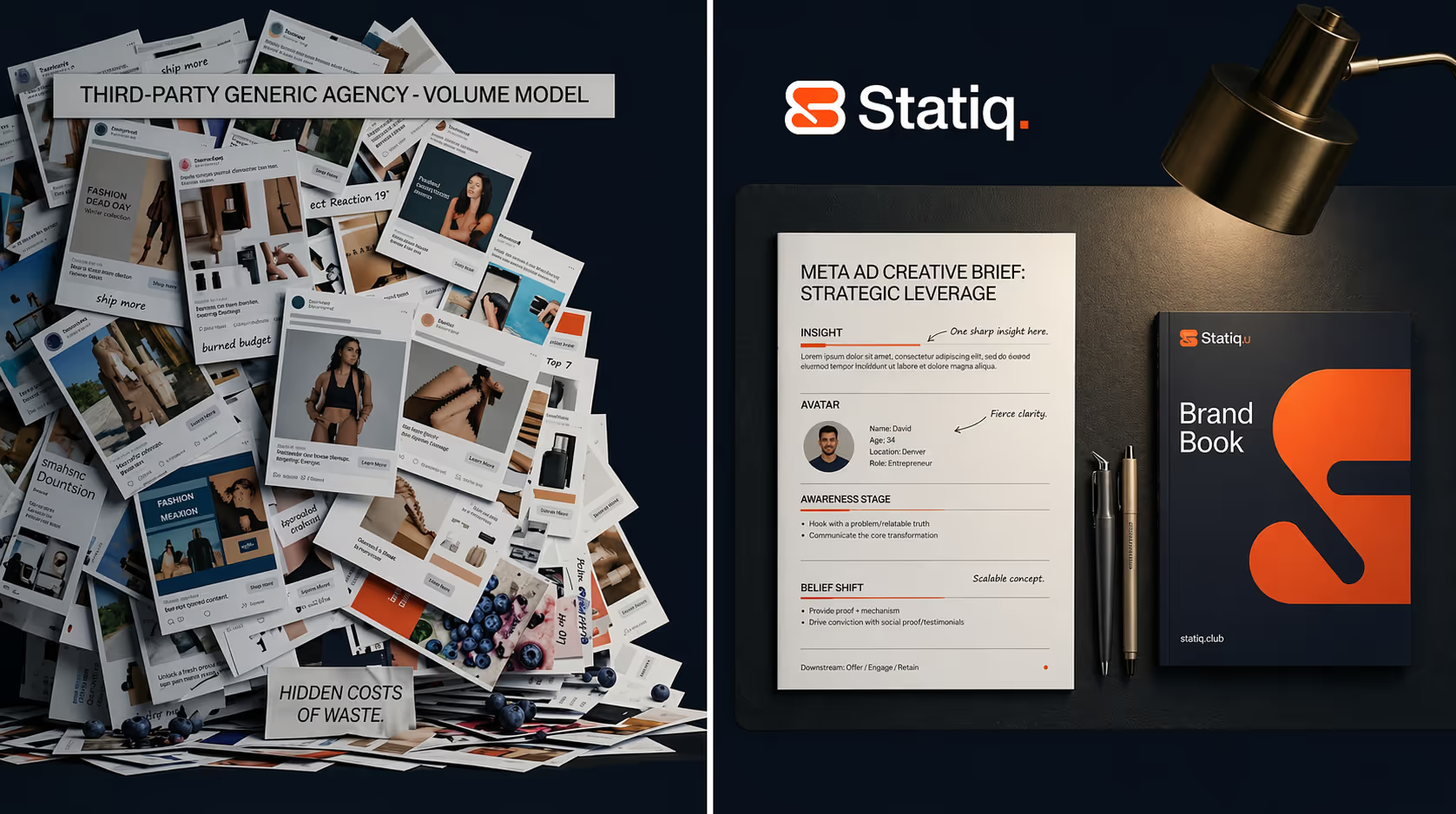
The volume model feels cheaper because the per-unit cost is low. It isn't cheaper. It's more expensive per winner, slower to find signal, and harder on the team producing it. The brands advocating for more creative are optimizing for the wrong number. The number to track isn't ads shipped. It's spend on ads that didn't work.
The Production Model That Doesn't Require More Headcount
The alternative isn't a smaller team working harder. It's a different process entirely.
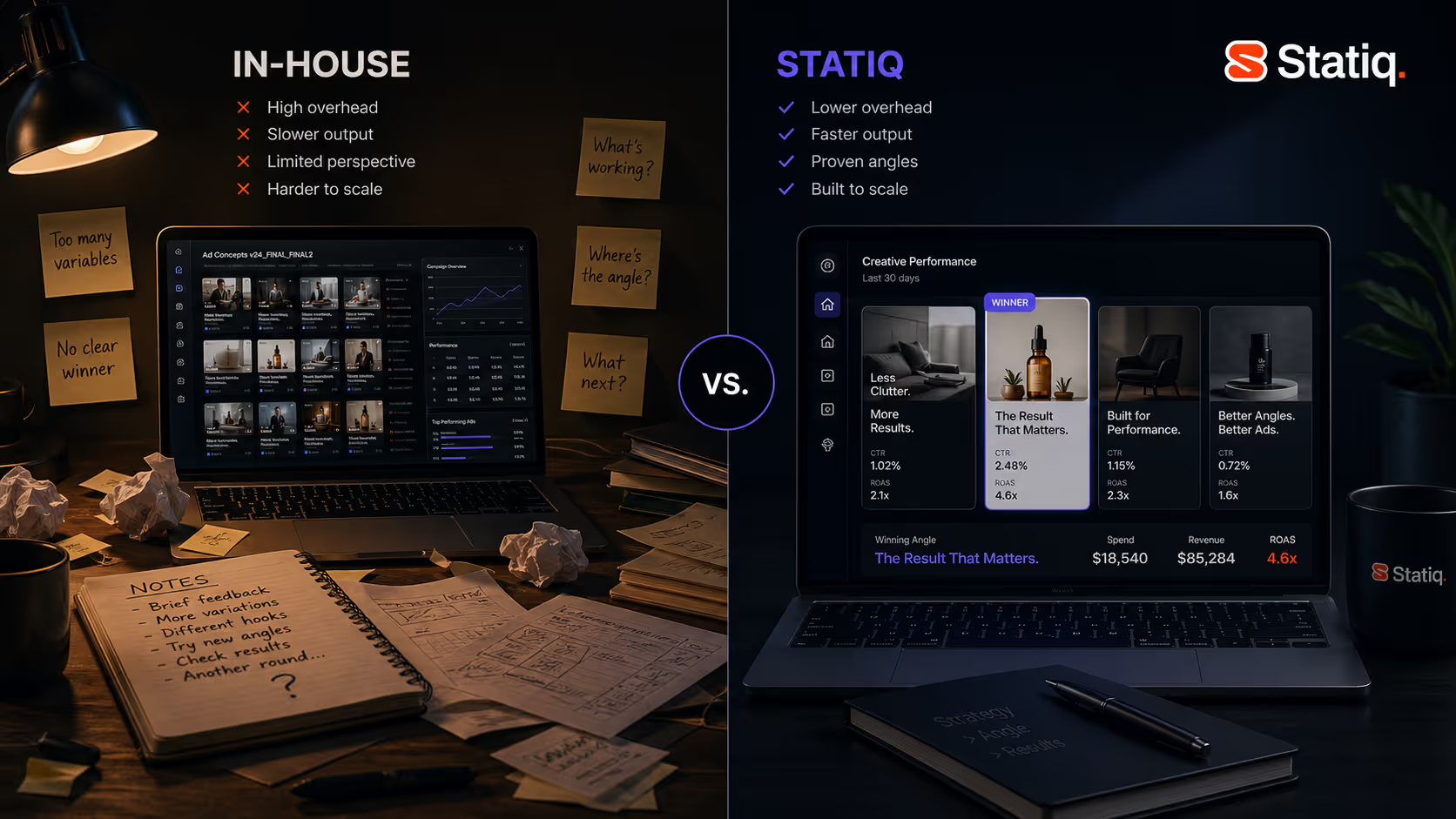
At Statiq, the brief is the leverage point. One sharp insight in the brief does more than 30 extra variations. A concept built on a clear avatar, a defined awareness stage, and a specific belief shift generates more useful variations than ten concepts built on vague direction, because every variation is starting from something real.
The workflow that makes 9,000 ads a month possible isn't a large team. It's a system where the brief forces clarity before anyone touches a design file, the same designer works on the same brand consistently, and the first round lands because the thinking happened before production started.
One of our clients, Flewd Stress Care, spent years cycling through freelancers and small agencies. Same pattern every time: quality or speed, never both. A new designer every time who didn't know the brand. Five, six, seven revision rounds before anything looked right. Their founder called it "a never-ending headache."
What changed wasn't the volume. It was the absence of friction, the same designer on every brief, a structure that forces clarity upfront, turnaround that means what it says. When those things are consistent, the relationship stops being something the team has to manage. It just works.
Signs Your Creative Process Has Hit Its Ceiling
Four signals that the current model can't scale further without breaking the team or the account, and what to do about each.
- Every new brief starts from scratch.
If your designers are re-learning the brand on every project, you're paying onboarding costs on every creative cycle. That's not a designer problem. It's a system problem. The fix: one dedicated designer per account, always. Not a rotation.
- Revision rounds are increasing, not decreasing.
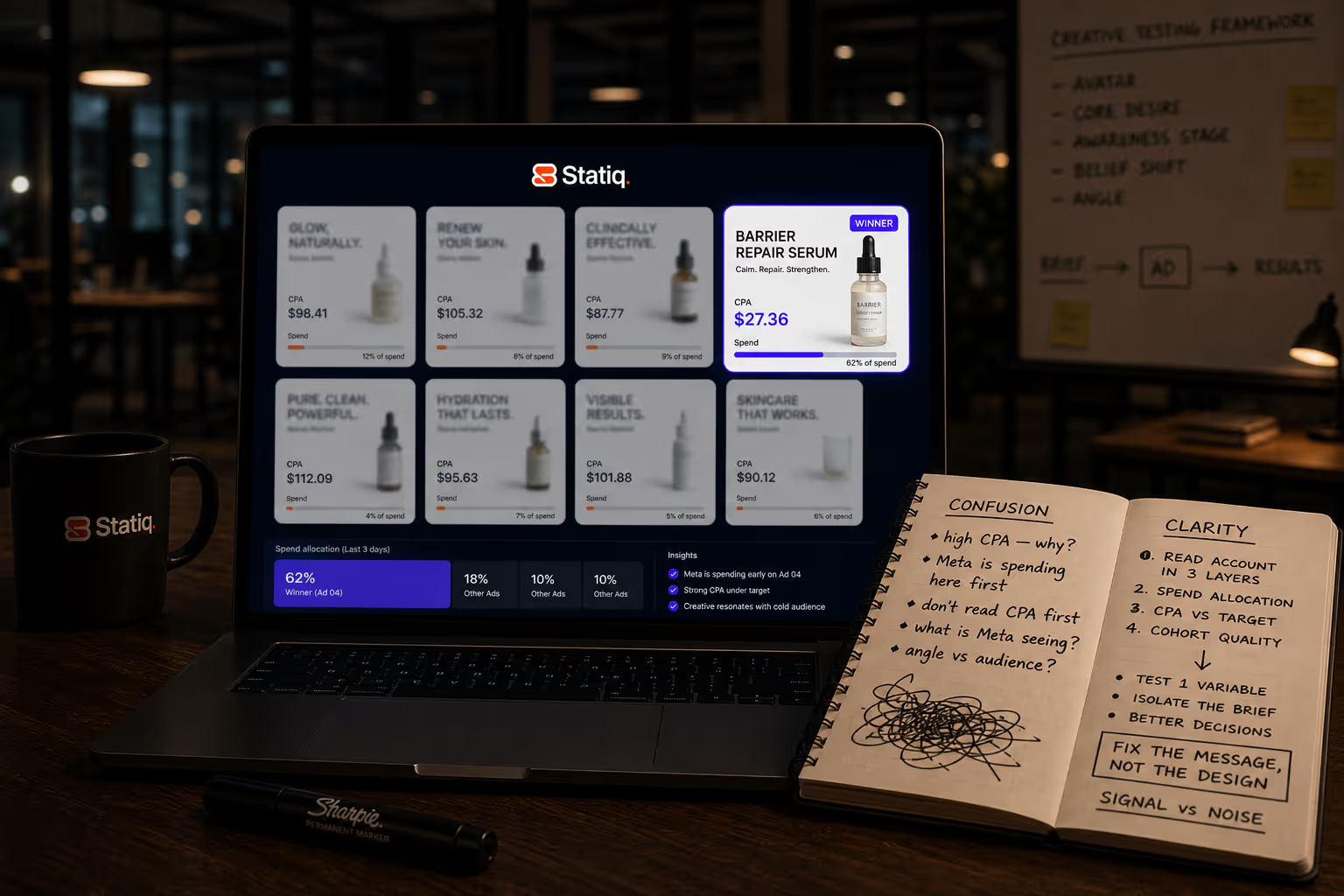
A scaling creative process gets more efficient over time, not less. If rounds are going up as volume goes up, the brief isn't doing its job before production starts. The fix: move the thinking upstream. A brief that answers the five questions: avatar, desire, awareness stage, belief shift, angle, before anyone touches a file cuts revision rounds at the source.
- Your best performers are variations of one original concept.
An account running 50 variations of the same three ideas isn't scaling, it's concentrating risk on a shrinking base. The fix: new original concepts on a consistent cadence, not just iterations of what already worked.
- The team is reactive, not proactive.
If the creative process is driven by what's fatiguing rather than what to test next, you're always one bad week away from a gap in the account. The fix: a forward-looking brief pipeline. The next concept should be in production before the current winner shows fatigue signals.
What Scaling Actually Looks Like: Week 1 vs. Month 3
- Week 1 with Statiq
A brand signs, briefs come in, ads go into the account by the end of the week. Not a pilot. Not a test phase. Production starts immediately because the system is built for it. - Month 3
The dynamic has shifted. The designer knows the brand. The brief gets sharper because both sides know what information matters. The first round lands more often. Revision cycles get shorter. The client team stops managing the creative process and starts managing the strategy: what to test next, which angles to push, where the account needs new concepts.
That's what a scaled creative process looks like. Not more ads per week. More signal per ad, more time for the people running the account to think rather than produce, and a pipeline of new concepts that doesn't require starting from zero every cycle.
The goal was never to ship more. It was to find winners faster, with less waste, on a model the team can sustain.
If any of that sounds like what's missing in your account, let's talk.