Written by

Reading time:
Minutes
Hiring a senior designer feels cheaper than paying an agency every month. You own the output, you control the cost, and the line item has a ceiling.
It usually isn't cheaper. Not when you count everything.
Most brands run the salary math and stop there. They miss the tools, the ramp time, the briefing overhead, and the hardest cost to quantify: the creative ceiling of a team that only sees one brand. This post breaks down what the in-house model actually costs in 2026, and the one calculation that changes the answer almost every time.
The real cost of an in-house creative team in 2026
Most VPs of Growth run the same math when they consider hiring in-house. A solid overseas designer: $3K/month. A copywriter: $3K/month. A strategist who knows what to test next: $6K/month. That's $12K/month before you've added tools, briefing overhead, or your own time. Compared to a Statiq retainer at $2,995/month, the math stops penciling out fast.
Because $12K is the starting point, not the total.
- Designer.
Even at overseas rates, a designer is execution only. Someone still has to tell them what to make. - Copywriter.
Every ad needs copy. That's a brief, a concept, and a revision cycle, on top of the design. If it's not a dedicated hire, it's your time or your designer's, and neither is free. - Creative director, or your own time.
Someone has to set the creative direction, write the briefs, and decide what to test next. If you're not hiring a CD, that person is you. Your time has a market rate. It belongs in the calculation. - Tools.
Figma, Adobe Creative Cloud, an AI generation subscription, a stock library. Most teams undercount this line until they add it up. It compounds every month whether the ads are working or not. - Briefing time.
Every concept needs a brief. Every brief needs a review. Every revision needs a decision. If that loop runs through you, that's a real percentage of your week, every week, that isn't going toward strategy or account management.
The in-house math misses the three things a salary can't buy: knowing what to test next, a workflow that never fails, and pattern recognition across 100+ brands. Those three things are what actually move the account. The rest is execution: and execution is getting cheaper every year.
What you're not counting: ramp time, management overhead, creative ceiling
The salary stack is the visible cost. The invisible cost is what happens between the hire and the first useful ad.
- Ramp time: months of payroll before the first winning brief
A new senior designer needs time to understand the brand, the audience, the tone, what's been tested, what failed and why. At Statiq, we've seen this pattern across every client that came to us after an in-house experiment: the first months of output from a new hire are orientation, not production. That's real payroll spend before the account sees a net-new concept worth testing. - Management overhead: a percentage of your week, every week
Every brief needs context. Every concept needs feedback. Every revision cycle needs a decision-maker. If you're the VP of Growth, that decision-maker is you. That's your own time spent managing a function that exists to support your function. The agency model doesn't eliminate that overhead entirely, but it compresses it significantly because the thinking arrives pre-done. - Creative ceiling: the hardest cost to put a number on
An in-house designer sees one brand, one category, one audience. They brief from the inside out, starting with what they know about the product and working toward the customer. That proximity is valuable for brand consistency. It's a liability for finding the angle a cold audience actually responds to. At Statiq, we run 9,000+ ads a month across 50+ DTC accounts. The pattern recognition that produces a winning angle for your brand comes from seeing what worked in twenty other accounts first.
The Statiq model: what you get and what you don't
Most agencies wait for your brief. Statiq doesn't.
The engagement starts at $2,995/month, all-in: strategy, copy, design, and performance analysis included.
Six months ago, Statiq made a decision that cost clients: the model shifted from execution partner to creative originator. The client doesn't need to show up with the idea anymore. Statiq does. That means every engagement now covers the full stack, not just design, but the thinking that makes design perform.
What The Work actually looks like
- Reading the data.
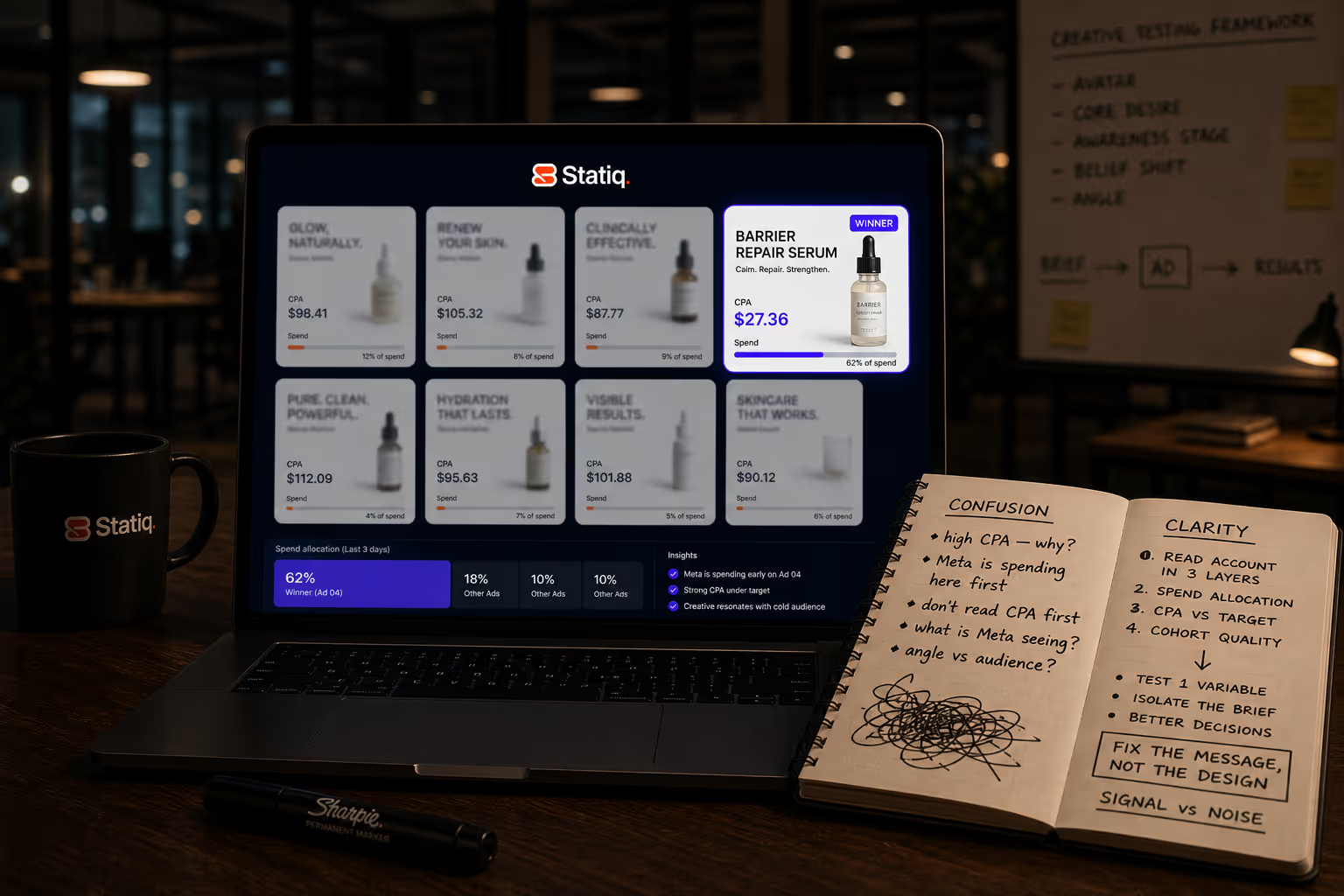
Every new client account gets the same diagnostic in week one: pull the 10 highest-spending ads from the last 90 days, map them against the five-question brief, identify the gaps. That's what determines what gets built next: not what the client thinks is missing, but what the data shows is untested. - Deciding what to test next.
This is the part most in-house teams can't do from the inside. The angle that works for your brand in month two is often something Statiq has seen work in a different category, for a different avatar, six months earlier. That pattern library only exists at scale, at 9,000+ ads a month across 50+ accounts. - Writing the copy.
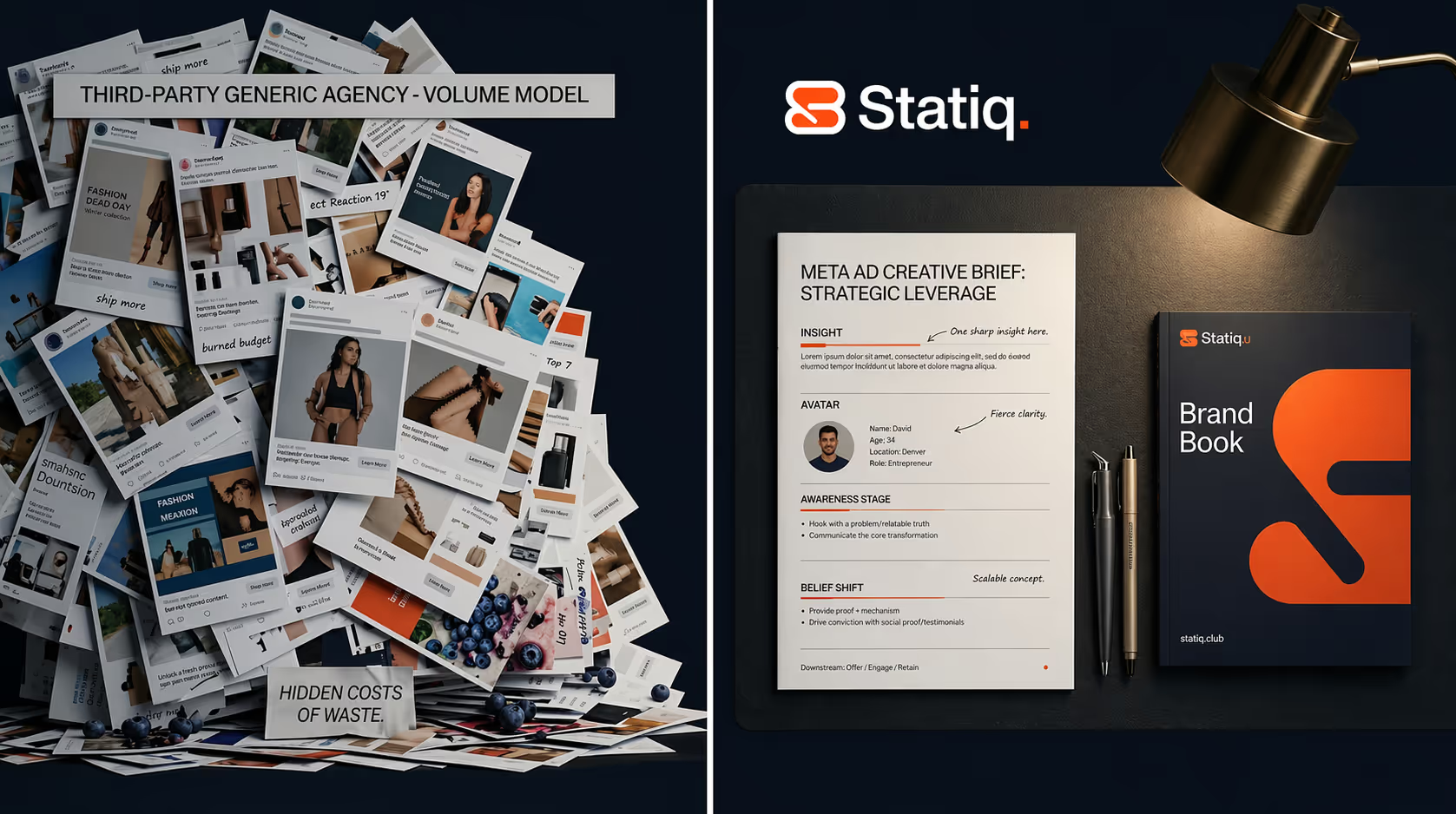
Ad copy is included. Not as an add-on, as part of the brief. The five-question framework: avatar, core desire, awareness stage, belief shift, angle, gets answered before a word of copy or a pixel of design is touched. - Executing the design.
One dedicated designer per account, consistently. Full Figma access so you see the work as it's built. By month three, the brief gets sharper because both sides know what information matters. - Iterating based on what's in market.
Ads ship. Data comes back. The next brief is built on what the account just learned. That loop: read, decide, write, design, ship, repeat, is what compounds over time.
What you don't get
A full-time employee who attends standups, owns brand identity, handles packaging, or covers non-Meta channels. If your bottleneck is brand identity or you need someone embedded in the business day-to-day, a Statiq engagement is the wrong solution. We'll tell you that on the discovery call before you sign anything.
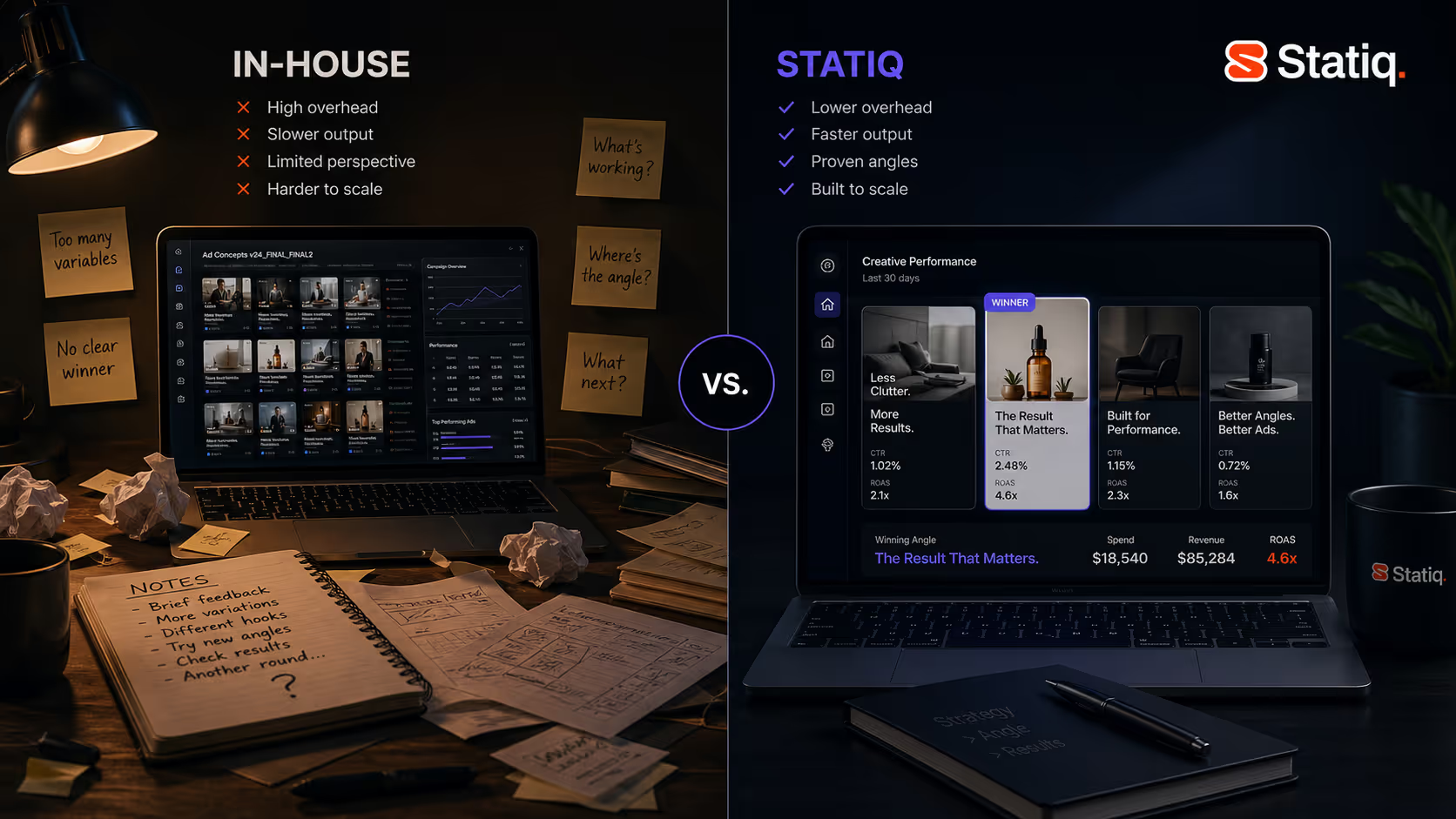
The cost per winning angle: in-house vs. Statiq
The question most brands ask is: what does an agency cost per month? That's the wrong question.
The right question is: what does each model cost you per winning angle, and what does each winning angle unlock at your spend level?
Here's how to run that math on your own account.
Take your all-in in-house cost for the year. Senior designer salary, tools, your briefing time valued at your hourly rate, ramp time on the last hire. That's your denominator. Now count the net-new winning angles your team found in the last 12 months. Not variations of existing winners. Not iterations on the same concept. Angles the account hadn't tested before that cleared your CPA target and scaled. Divide the first number by the second. That's your cost per winner.
Now do the same math on an external partner. All-in annual fee divided by net-new winning angles delivered in 12 months.
The number that comes out of both calculations is the real comparison. Not the monthly fee. Not the salary line. The cost per angle that moves the account.
Most brands who run this math are surprised by the result: not because the agency is cheap, but because the in-house cost per winner is higher than the spreadsheet suggested. The salary was visible. The ramp time, the management overhead, the creative ceiling, those were not.
Who should stay in-house and who should work with us
Most agencies won't tell you when you're not the right fit. We will.
Stay in-house if:
- You're under $10K/month in Meta spend.
At that level, the volume of testing needed to find winning angles doesn't justify an external partner. One solid in-house designer working from a clear brief framework can cover the ground. The math only flips at serious spend. - Your bottleneck is brand identity, not ad creative. If what's missing is visual consistency across packaging, website, and social: that's a brand design problem, not a performance design problem. Statiq is built for the latter. Conflating the two is expensive for both sides.
- You have a senior creative who already pattern-matches across accounts. Rare, but it exists. If your in-house lead has worked across multiple DTC brands in different categories and can brief from the outside in: from the customer's awareness stage toward the product, you have something most in-house teams don't. Keep them.
Work with Statiq if:
- You're spending $100K+/month on Meta and your hit rate is dropping. Dropping hit rate at scale is almost never a media buying problem. It's a brief problem: the account has exhausted the angles it knows how to find internally. That's the gap Statiq exists to fill.
- Your in-house team is producing variations, not net-new angles.
If the last three months of creative output are iterations of the same two or three concepts, the internal team has hit its creative ceiling. More designers won't fix that. Different briefs will, and those briefs need to come from outside the brand. - Your VP of Growth is spending more than 20% of the week on creative. That's a misallocation. The VP's job is strategy: what to test next, how to read the account, where to push spend. If creative production is consuming that bandwidth, the account is paying a hidden cost that doesn't show up in any spreadsheet.
If any of that sounds familiar, let's talk. We can tell you within one conversation whether Statiq is the right fit